
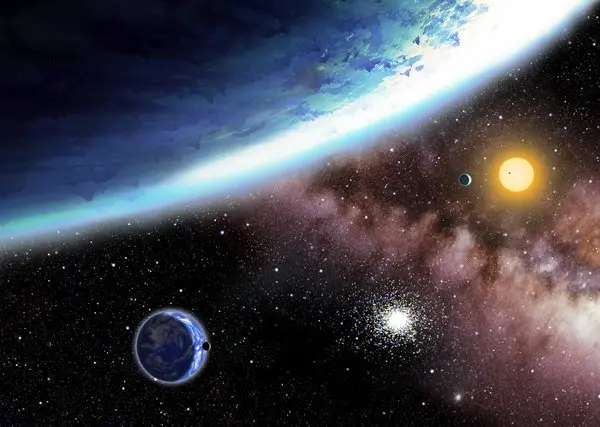
Imagine looking up at the night sky, dotted with countless stars, and realizing that the universe holds far more than what meets the eye. Beyond the twinkling lights, there are planets—billions, perhaps trillions of them—wandering alone in the vast darkness, untethered to any star. These are rogue planets, mysterious worlds that challenge our understanding of the cosmos. In this article, we’ll dive deep into the fascinating world of rogue planets, exploring what they are, how they form, why they matter, and how you can learn more about them. Whether you’re a space enthusiast or just curious about the universe, this journey will spark wonder and curiosity.
What Are Rogue Planets?
Rogue planets, sometimes called orphan or free-floating planets, are planetary bodies that drift through space without orbiting a star. Unlike Earth or Jupiter, which are gravitationally bound to the Sun, these worlds roam the galaxy alone. They’re like cosmic nomads, untethered and independent, floating in the interstellar void.
Why Don’t They Orbit Stars?
Most planets form around stars, but rogue planets either get ejected from their original systems or form independently in the depths of space. Gravitational interactions or stellar radiation can disrupt their orbits, sending them into the abyss. It’s a chaotic universe out there, and these planets are proof of its wild nature.
How Common Are Rogue Planets?
Estimates suggest there could be 5 trillion rogue planets in the Milky Way alone, far outnumbering the stars. For every star in our galaxy, there may be hundreds or even thousands of these wandering worlds, making them a surprisingly common cosmic phenomenon.
The Science Behind Rogue Planets
The discovery of rogue planets has reshaped how we view the universe. Thanks to advanced telescopes like the James Webb Space Telescope (JWST), astronomers are uncovering these elusive worlds in greater detail. Let’s break down the science behind their existence.
How Do Rogue Planets Form?
Rogue planets can form in two primary ways:
- Ejection from Solar Systems: During the chaotic early stages of a solar system, gravitational interactions between planets can fling some out into interstellar space. Imagine a cosmic game of pinball where smaller planets lose and get launched into the void.
- Direct Formation: Some rogue planets form like stars, condensing directly from clouds of gas and dust in nebulae. These “failed stars” never gain enough mass to ignite nuclear fusion, so they remain planetary in nature.
This dual origin story makes rogue planets a unique bridge between planets and stars.
How Are They Detected?
Detecting a planet without a star is no easy feat. Astronomers rely on techniques like:
- Gravitational Microlensing: When a rogue planet passes in front of a distant star, its gravity bends the star’s light, creating a detectable brightening effect.
- Infrared Observations: Rogue planets emit faint heat signatures, which telescopes like JWST can pick up in infrared wavelengths.
These methods have revealed rogue planets as massive as Jupiter and as small as Earth.
What Are They Like?
Rogue planets vary widely in size, composition, and temperature. Some are gas giants, while others are rocky worlds. Without a star’s heat, they’re often frigid, but internal heat from radioactive decay or residual formation energy can keep their cores warm. Picture a dark, icy world glowing faintly in the cosmic night.
Why Rogue Planets Matter
Rogue planets aren’t just cosmic curiosities—they hold clues to the universe’s history and future. Studying them helps us understand planetary formation, stellar evolution, and even the potential for life in unexpected places.
Clues to Planetary Formation
By studying rogue planets, scientists learn how solar systems stabilize over time. The fact that so many planets get ejected suggests that chaos is a natural part of planetary system development. It’s like learning about a family by studying the siblings who left home.
Potential for Life?
Could rogue planets harbor life? It sounds unlikely without a star’s warmth, but some scientists believe subsurface oceans, heated by internal processes, could exist. Think of Europa, Jupiter’s moon, but floating alone in space. It’s a long shot, but the universe loves surprises.
A New Perspective on the Cosmos
Rogue planets challenge the idea that planets must orbit stars. They remind us that the universe is full of exceptions, pushing us to rethink our definitions of “planet” and “home.” They’re the rebels of the galaxy, and they’re rewriting the rulebook.
Comparing Rogue Planets to Star-Bound Planets
To understand rogue planets better, let’s compare them to the planets we know, like those in our Solar System.
| Feature | Rogue Planets | Star-Bound Planets |
|---|---|---|
| Orbit | None; drift freely in space | Orbit a star (e.g., Sun) |
| Heat Source | Internal heat (radioactive decay, etc.) | Stellar radiation and internal heat |
| Detection Method | Microlensing, infrared | Transit, radial velocity, direct imaging |
| Estimated Number | Trillions in Milky Way | Tens per star (hundreds of billions) |
| Potential for Life | Low, but possible in subsurface oceans | Higher, especially in habitable zones |
Pros of Studying Rogue Planets
- Reveal insights into planetary system dynamics.
- Expand our understanding of starless environments.
- Offer clues about the universe’s total planetary population.
Cons of Studying Rogue Planets
- Difficult to detect due to lack of starlight.
- Limited data on their composition and atmospheres.
- Expensive and complex observation techniques required.
The Role of Technology in Discovering Rogue Planets
Without cutting-edge technology, rogue planets would remain invisible. Let’s explore the tools that have brought these worlds into focus.
The James Webb Space Telescope (JWST)
JWST has been a game-changer, spotting Jupiter-sized rogue planets in regions like the Perseus Molecular Cloud. Its infrared capabilities allow it to detect faint heat signatures from these distant worlds.
Gravitational Microlensing Surveys
Surveys like the Optical Gravitational Lensing Experiment (OGLE) use microlensing to catch rogue planets bending starlight. These surveys have confirmed that rogue planets are far more common than we once thought.
Future Telescopes and Missions
Upcoming missions, like the Nancy Grace Roman Space Telescope, promise to uncover even more rogue planets. These tools will help us map the galaxy’s hidden population of wandering worlds.
People Also Ask (PAA)
Here are answers to common questions about rogue planets, inspired by real Google searches.
What Is a Rogue Planet?
A rogue planet is a planetary body that doesn’t orbit a star, floating freely in space. They can form through ejection from a solar system or directly from gas clouds. They’re hard to detect but incredibly numerous.
How Many Rogue Planets Are There?
Estimates suggest there are 5 trillion rogue planets in the Milky Way, potentially outnumbering stars by a factor of 100 to 100,000. Their exact number is still a topic of active research.
Can Rogue Planets Support Life?
While unlikely, some rogue planets might have subsurface oceans warmed by internal heat, creating conditions where microbial life could exist. It’s speculative but not impossible.
How Are Rogue Planets Detected?
Astronomers use gravitational microlensing and infrared observations to find rogue planets. Telescopes like JWST and surveys like OGLE are key to spotting these elusive worlds.
Exploring Rogue Planets: Where to Learn More
If you’re eager to dive deeper into rogue planets, here are some resources and tools to explore:
- NASA’s Exoplanet Exploration Website: Offers updates on rogue planet discoveries and exoplanet research. Visit exoplanets.nasa.gov.
- The Planetary Society: Provides beginner-friendly articles and podcasts on rogue planets and space exploration. Check out planetary.org.
- Sky & Telescope Magazine: A great source for astronomy news, including rogue planet findings. Available at skyandtelescope.org.
Best Tools for Amateur Astronomers
- Stellarium: A free, open-source planetarium software to explore the night sky and learn about celestial objects.
- SkySafari: A mobile app for stargazing, with detailed information on planets and stars.
- AstroPixel: A community-driven platform for sharing astrophotography and learning about cosmic phenomena.
The Future of Rogue Planet Research
The study of rogue planets is still in its infancy, but the future is bright. As telescopes improve and new missions launch, we’ll uncover more about these cosmic wanderers.
Upcoming Missions
The Nancy Grace Roman Space Telescope, set to launch in 2027, will use microlensing to detect thousands of rogue planets. Its wide-field imaging will revolutionize our understanding of the galaxy’s planetary population.
Citizen Science Opportunities
You don’t need a PhD to contribute to rogue planet research. Platforms like Zooniverse allow amateurs to analyze telescope data and help identify potential rogue planets. It’s a chance to be part of cosmic history.
What’s Next for Rogue Planets?
As we learn more, rogue planets could redefine our understanding of the universe. They might even hold clues to the origins of life or the fate of our own Solar System. The possibilities are as vast as space itself.
FAQ: Your Questions About Rogue Planets Answered
1. What causes a planet to become rogue?
Rogue planets can be ejected from their original solar systems due to gravitational interactions with other planets or stars. Alternatively, they may form directly from collapsing gas clouds, never orbiting a star.
2. Are rogue planets dangerous to Earth?
No, rogue planets pose no direct threat to Earth. They’re far too distant and move through interstellar space, not our Solar System. The odds of one passing close enough to cause harm are astronomically low.
3. How do rogue planets stay warm without a star?
Internal heat from radioactive decay or residual formation energy can keep rogue planets warm. Some may even have subsurface oceans, similar to moons like Europa or Enceladus.
4. Can we visit a rogue planet?
Visiting a rogue planet is currently impossible with our technology due to their distance and lack of a star for navigation. Future advancements in propulsion might make such missions feasible, but it’s a distant dream.
5. Why are rogue planets hard to study?
Rogue planets don’t emit or reflect much light, making them difficult to detect. Their isolation from stars means we rely on specialized techniques like microlensing or infrared imaging, which are complex and costly.
A Personal Connection to the Cosmos
When I was a kid, I’d lie in my backyard, staring at the stars, wondering what else was out there. The idea of rogue planets—worlds drifting alone in the dark—captures that same sense of awe and mystery. They remind us that the universe is full of surprises, challenging our assumptions and inviting us to explore. Whether you’re an amateur stargazer or just someone curious about the cosmos, rogue planets offer a glimpse into the wild, untamed nature of space.
Conclusion: The Cosmic Nomads Await
Rogue planets are more than just celestial oddities—they’re a testament to the universe’s complexity and beauty. From their mysterious origins to their potential to reshape our understanding of life, these wandering worlds are a frontier waiting to be explored. So, next time you look up at the night sky, remember: for every star you see, there are countless planets drifting in the darkness, each with a story to tell. Grab a telescope, dive into the resources above, and start your journey into the cosmos today.